

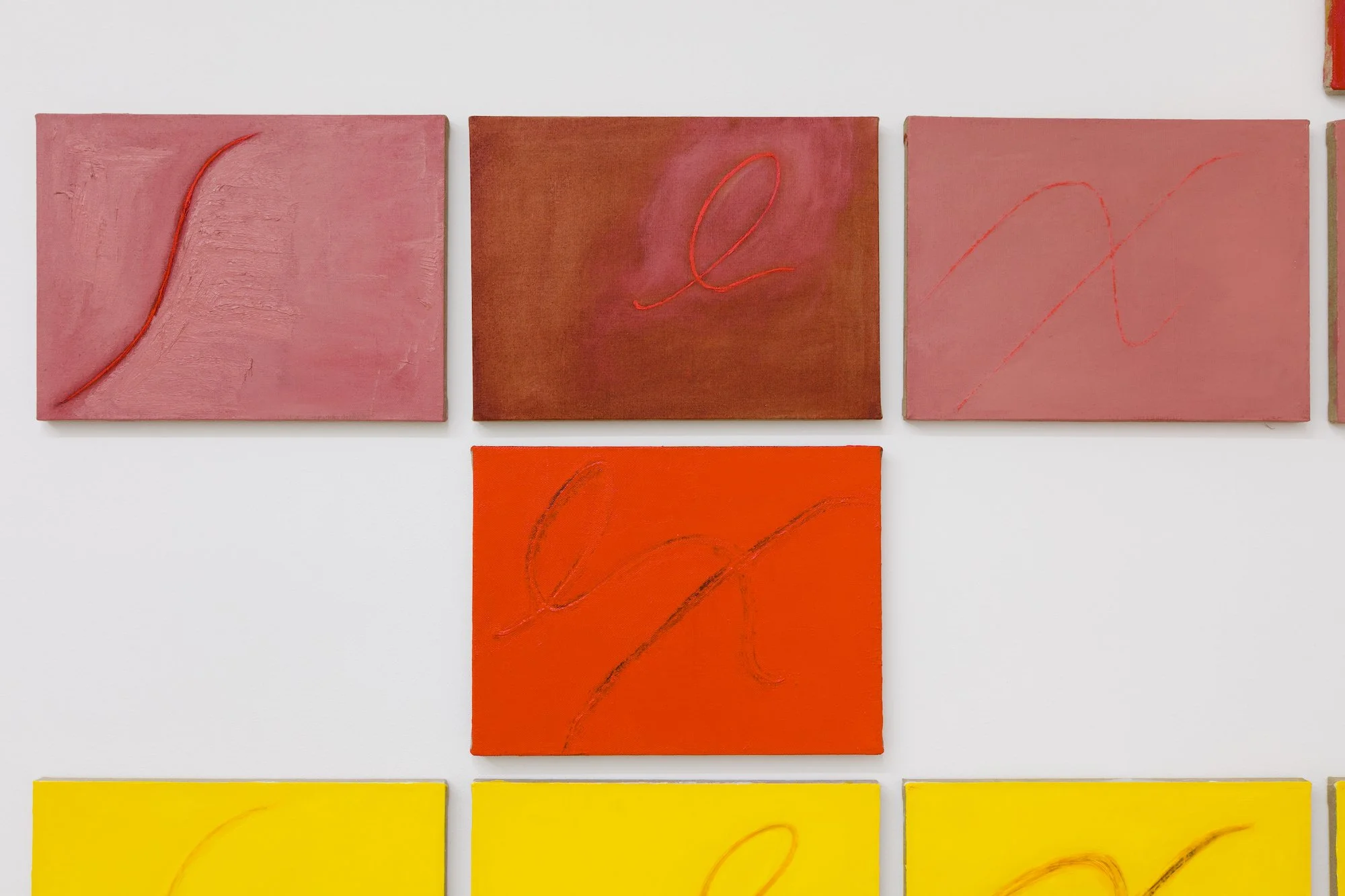
Mira Schor
Sexual Pleasure
On view at Art Basel Unlimited, Basel, CH
June 16-22, 2025
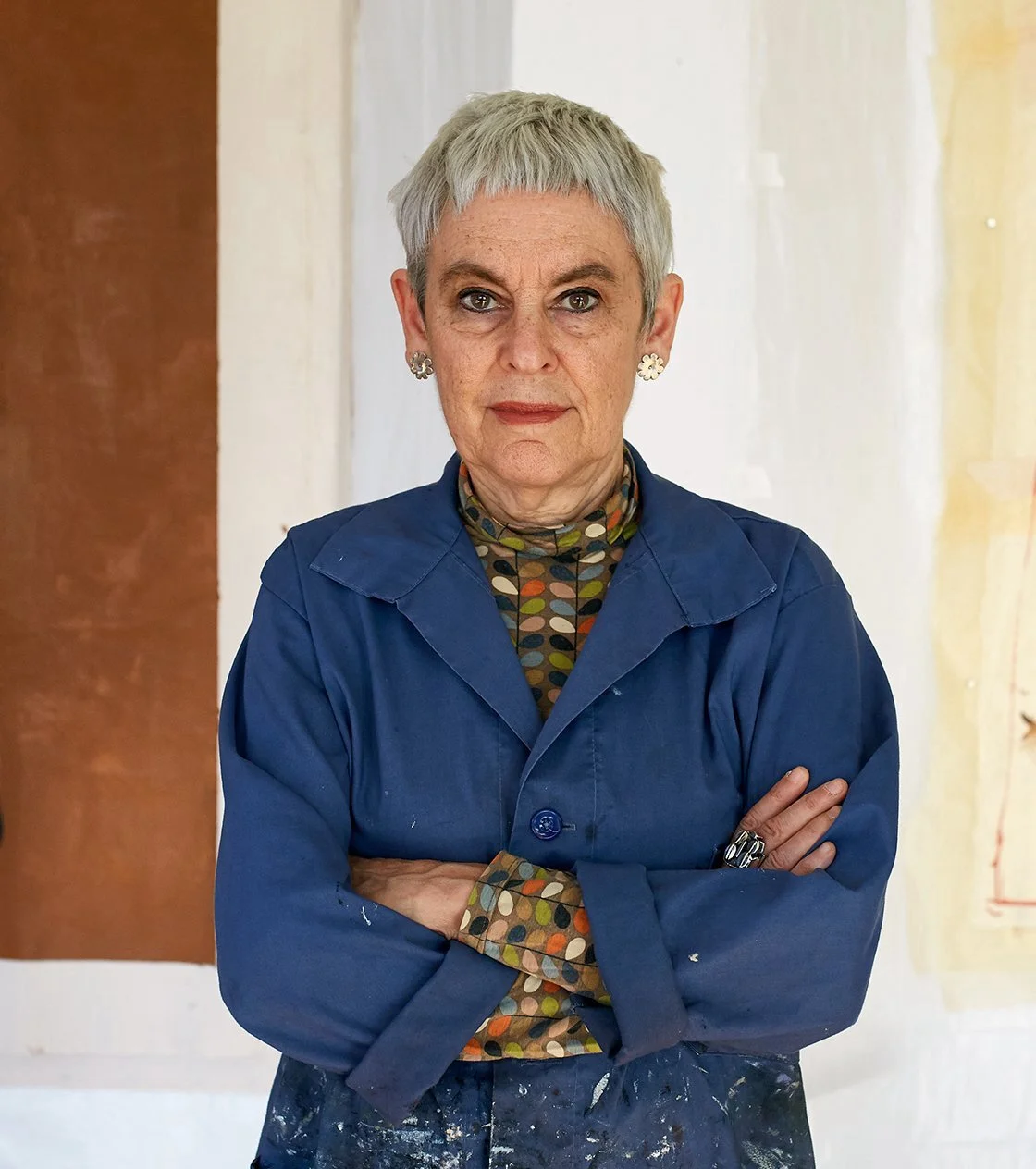
Mira Schor
Mira Schor is one of the foremost feminist painters of the past fifty years. Operating in the nexus of language, painting, and feminist theory, Schor has continually imbued formalism with political urgency, and reminded viewers that written discourse and physical form are inherently linked. Her work has included major periods in which gendered narrative and representation of the body have been featured; in other periods the focus of her work has been representation of language in drawing and painting. She draws on multiple sources of imagery and art historical reference to inform her paintings. Her imagery and surfaces are sometimes transgressive, yet often at the same time delicate, poetic, and private, embodying her richly dimensional thinking.
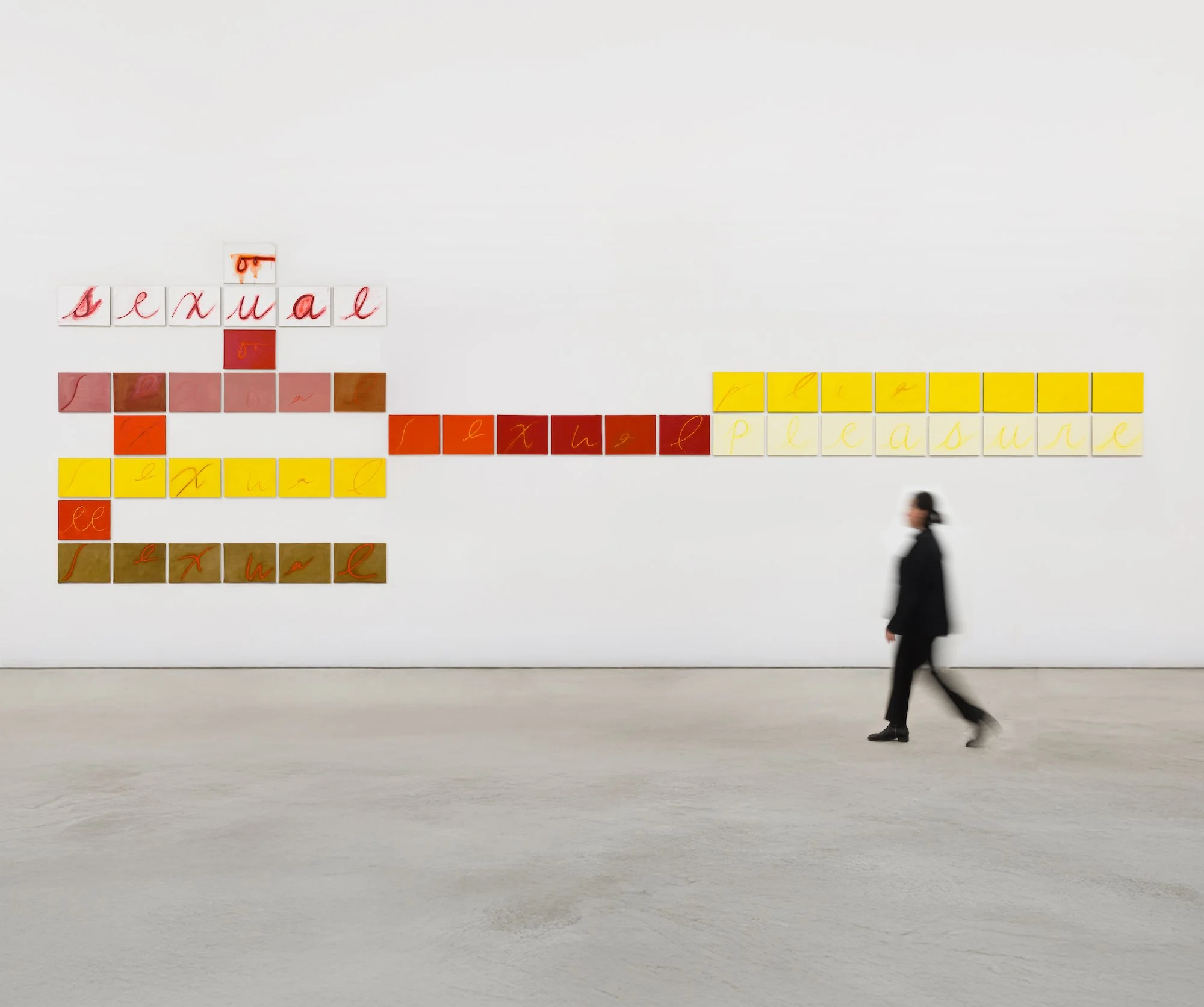
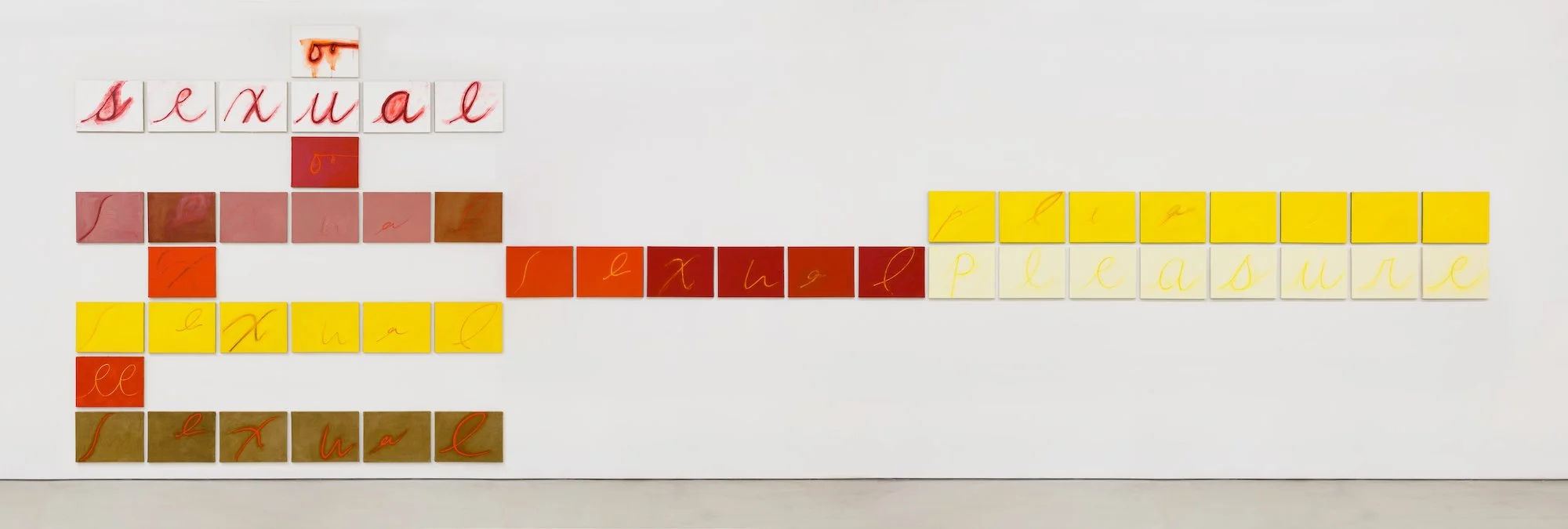
Mira Schor, Sexual Pleasure, 1998
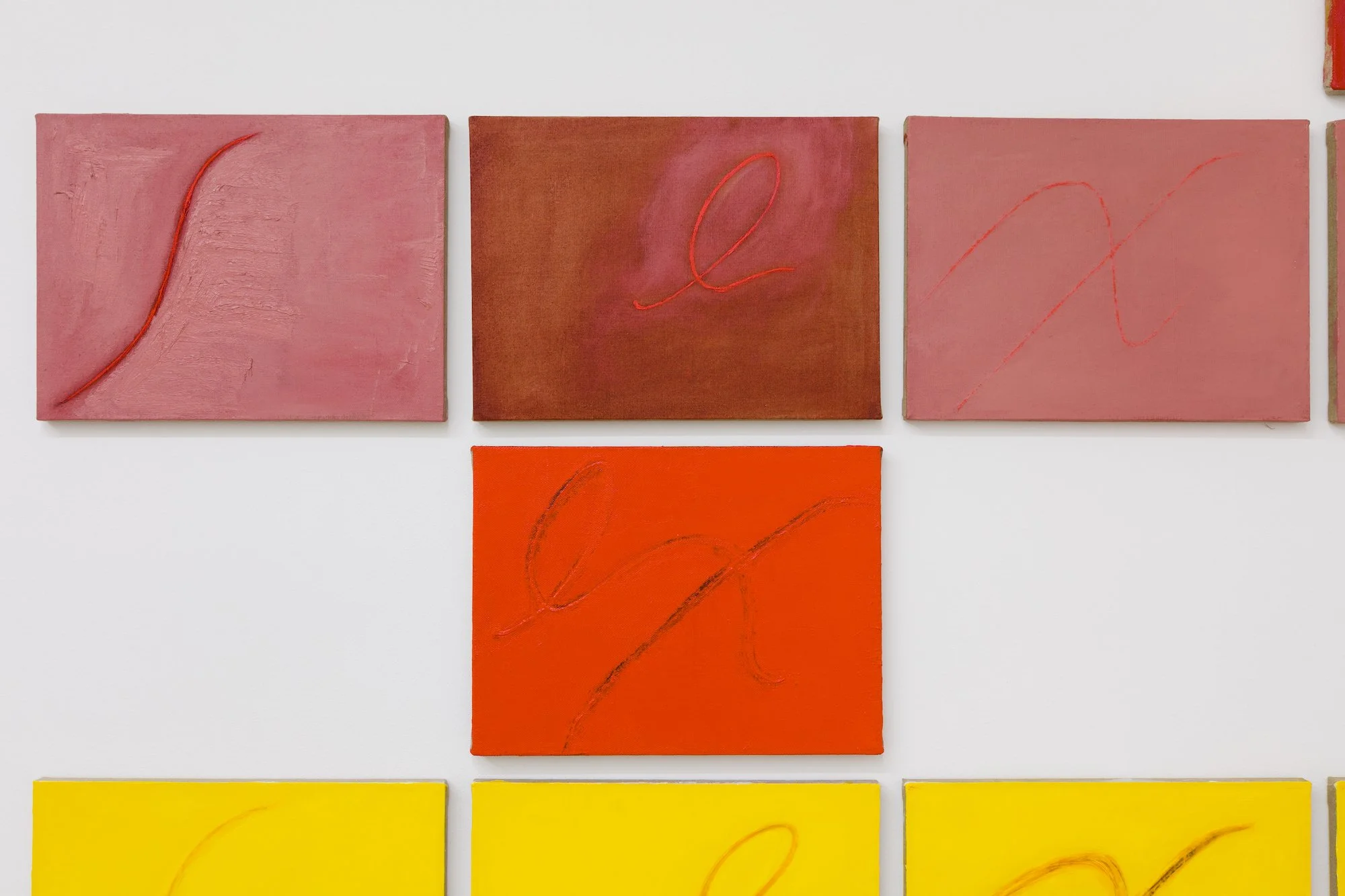
Ink, oil, gesso on 50 canvases
12 x 16 inches (each), 103 x 340 inches (total), 30.5 x 40.6 cm (each), 261.6 x 863.6 cm (total)
Mira Schor's Sexual Pleasure (1998) is a fifty-canvas manifesto spanning 28 feet (8 5/8 meters), the culmination of a decade-long period of appropriating patriarchal language from war, medicine, and law within a dedication to the expressive qualities of oil paint. The Mondrian-inspired checkerboard in luminous lemon yellow and blood-red cadmium emerged amid the AIDS crisis, "Don't Ask, Don't Tell," the Riot Grrrl movement, intersectional and sex-positive feminist frameworks.
During the 1990s, Schor's deployment of elliptical phrases like "margin of safety", "area of denial" and "undue burden" function as coded critiques of institutional violence against women and queer communities. Sexual Pleasure is the culmination of these "word paintings." The work's expansive format corresponds to Jenny Holzer's text-based interventions, while its assertion of sexual agency extends the sex-positive practices of Carolee Schneemann and David Wojnarowicz.
Sexual Pleasure transcends female subjectivity to encompass all bodies constrained by patriarchal structures, positioning sexual self-determination as radical political resistance and self-love.



“It is important overall to understand Sexual Pleasure for its intellectual role, for its role in relation to my engagement with the critique of painting, most importantly articulated in “Figure/Ground” and the “Afterword” of Wet [1997]. Or put another way, along with War Frieze, it is a missing link in the history of painting in the 80s through 90s, a part of a history that no one cares about at the moment, but that was crucial to art at that time.
Sexual Pleasure has to be seen as the culmination of my critical, one-sided conversation from the early 80s onward with the critique of painting, painting as a “dysfunctional plastic category” (Buchloh) . There was certainly a sexual and more importantly affective aspect to my engagement with that critique. As such the painting should be interpreted in relation to my writings in Wet, particularly “Figure/Ground” (1990).”
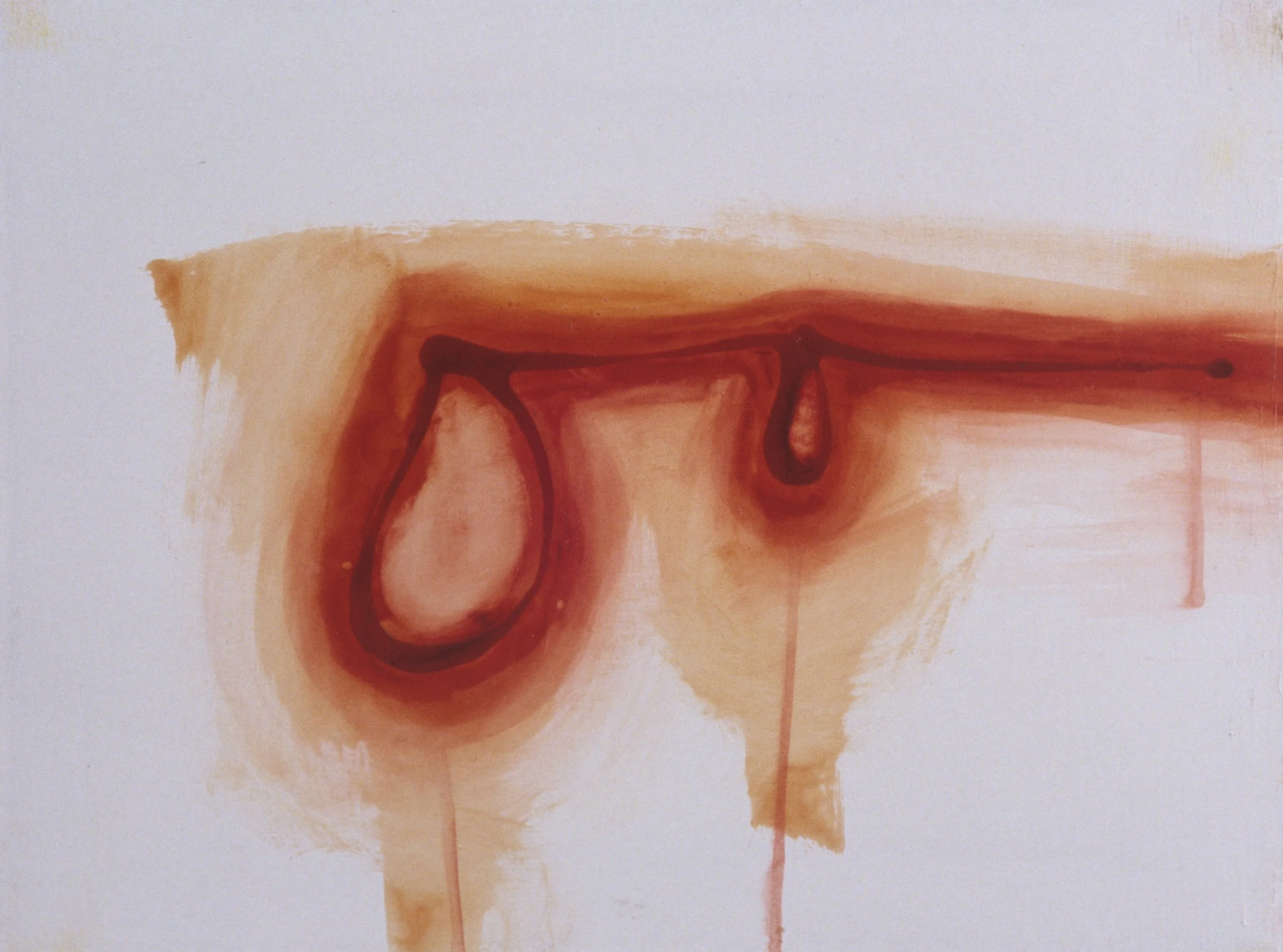
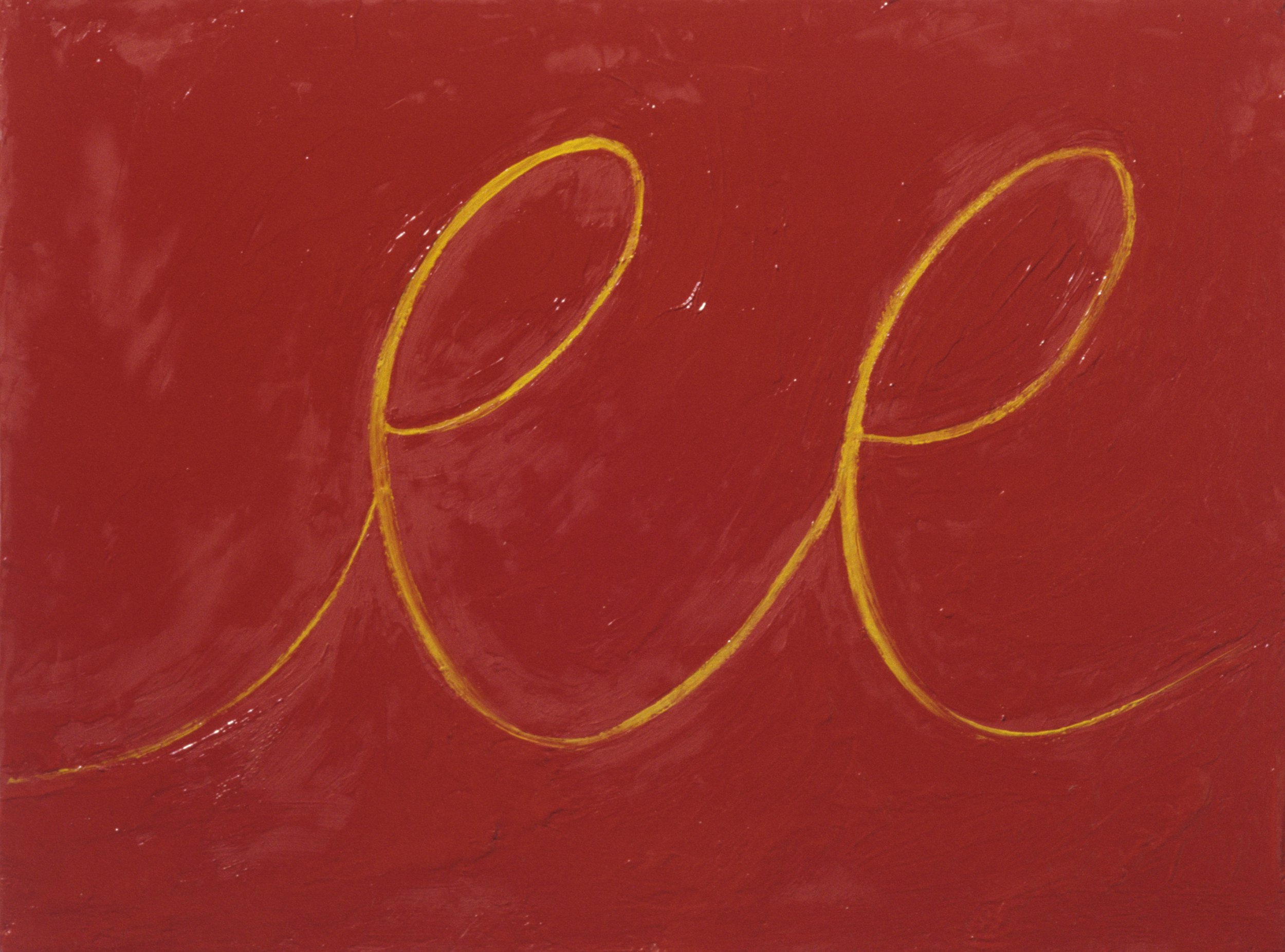
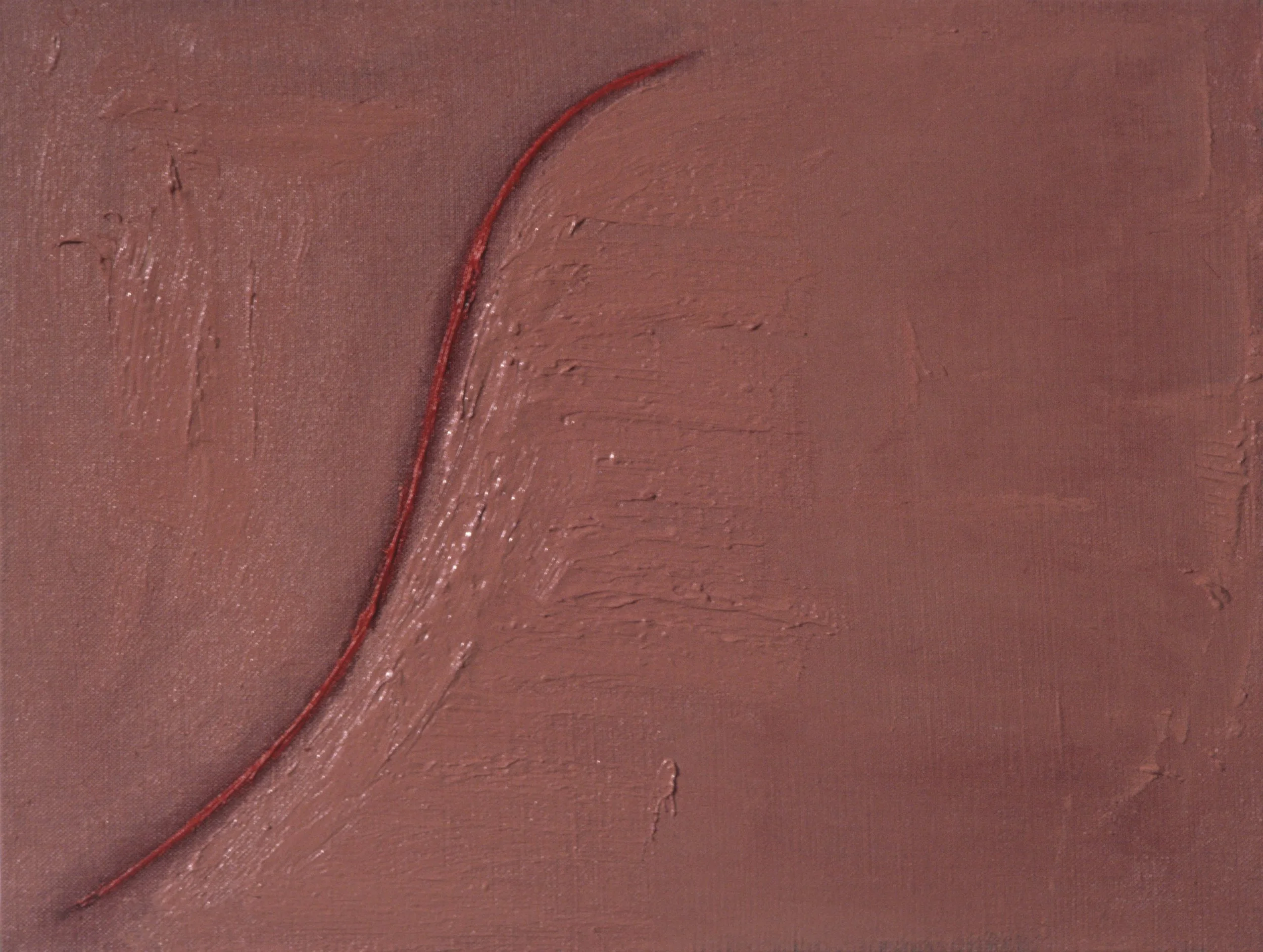
“In that regard I have been thinking this summer again about the terms of my “agenda”—to bring my experience of living inside a female body—with a mind—into high art in as intact as form as possible… I’m concerned with exteriorizing, visually realizing, and performing the interiority of women’s intellectual lives, the life of their thoughts, which may include the self, politics, theory, and philosophy (including what I think of patriarchy but not exclusively). ”

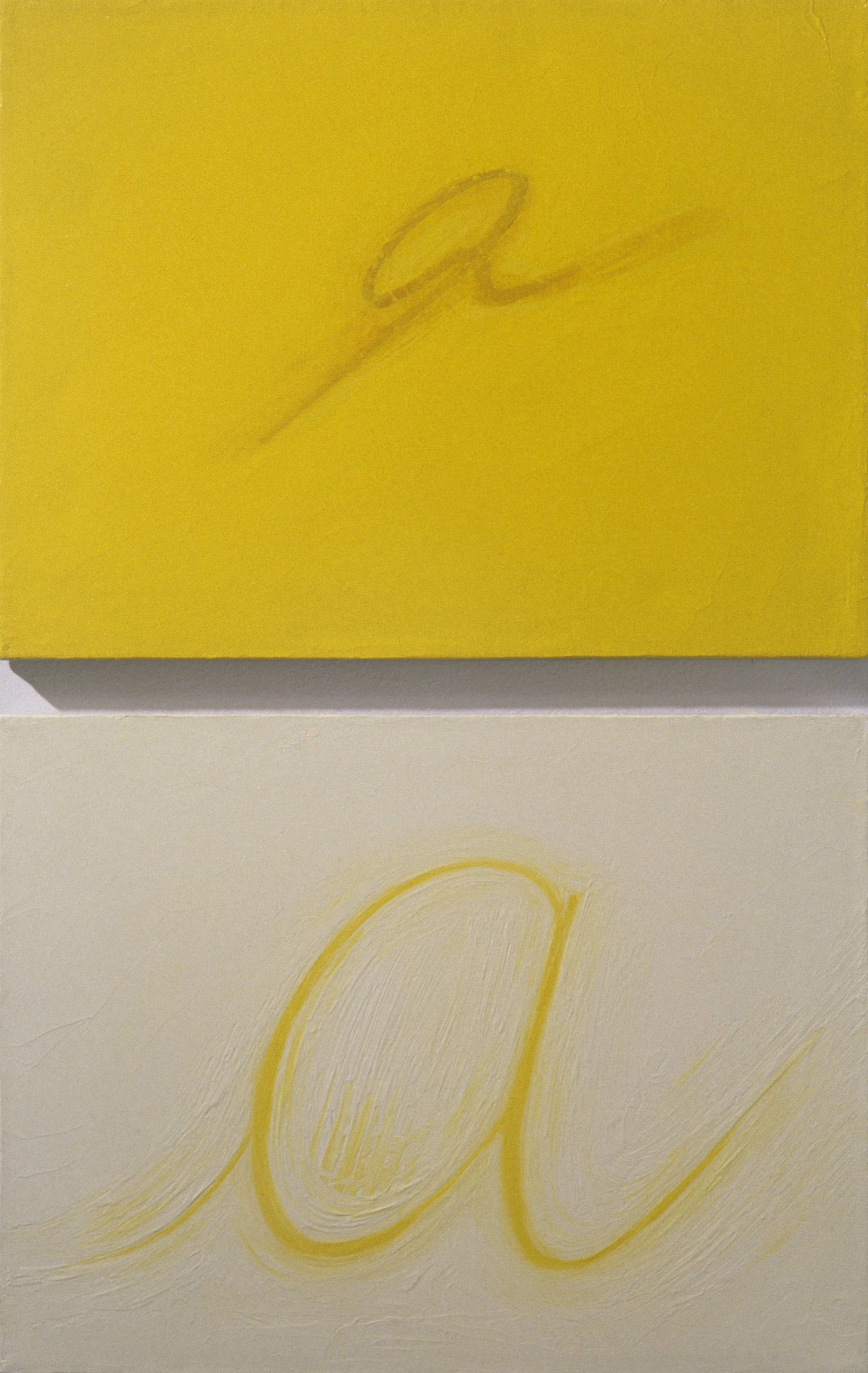
“If I were to install Sexual Pleasure with the work I felt it most spoke to I would hang it across from a late Mondrian, Broadway Boogie Woogie [1942-43]. If not the work, then a postcard of that work! because once I had finished Sexual Pleasure I felt it is what would happen if that Mondrian painting could talk—more accurate to say if that painting could write.”

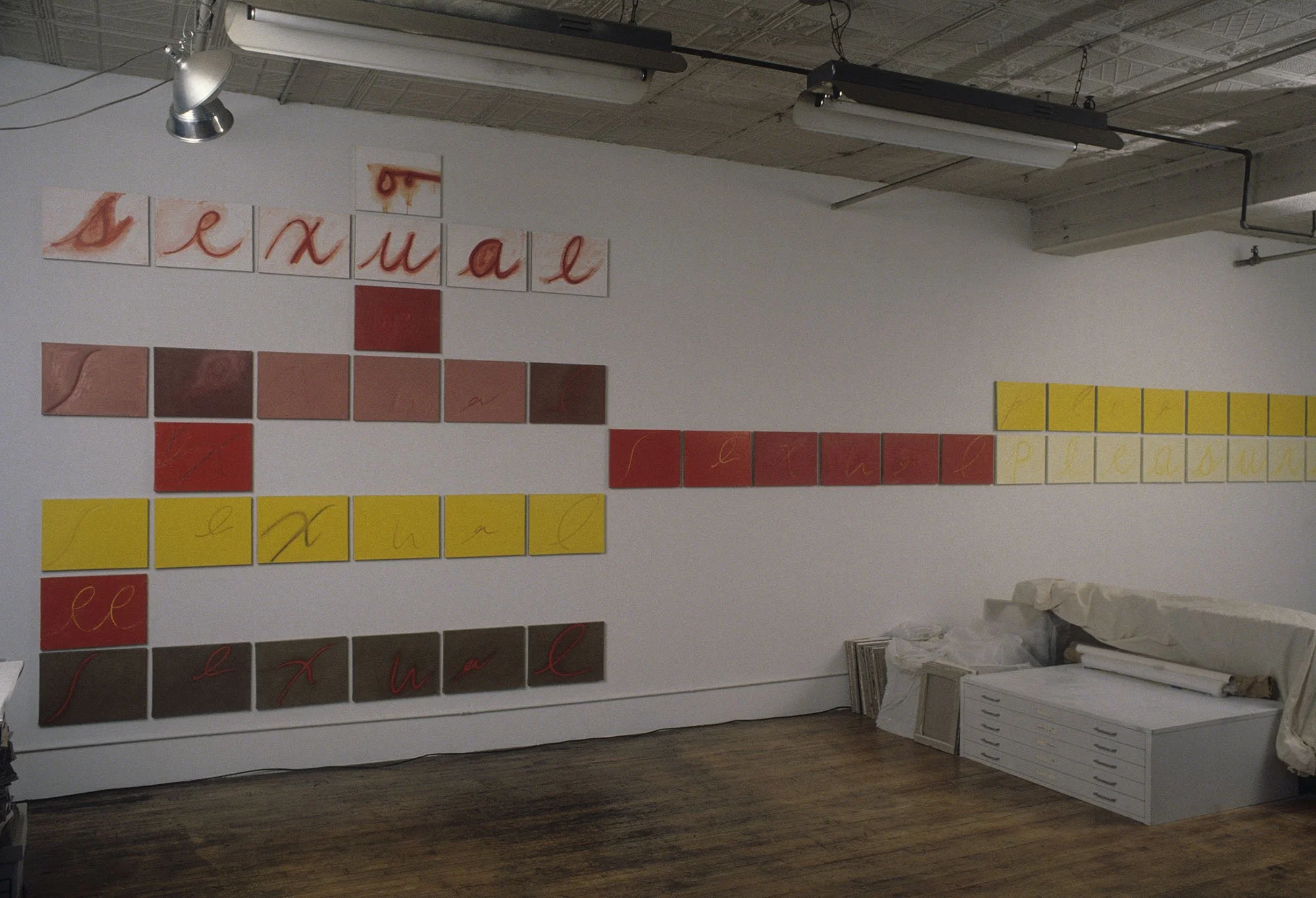
Sexual Pleasure, 1998, Installation View
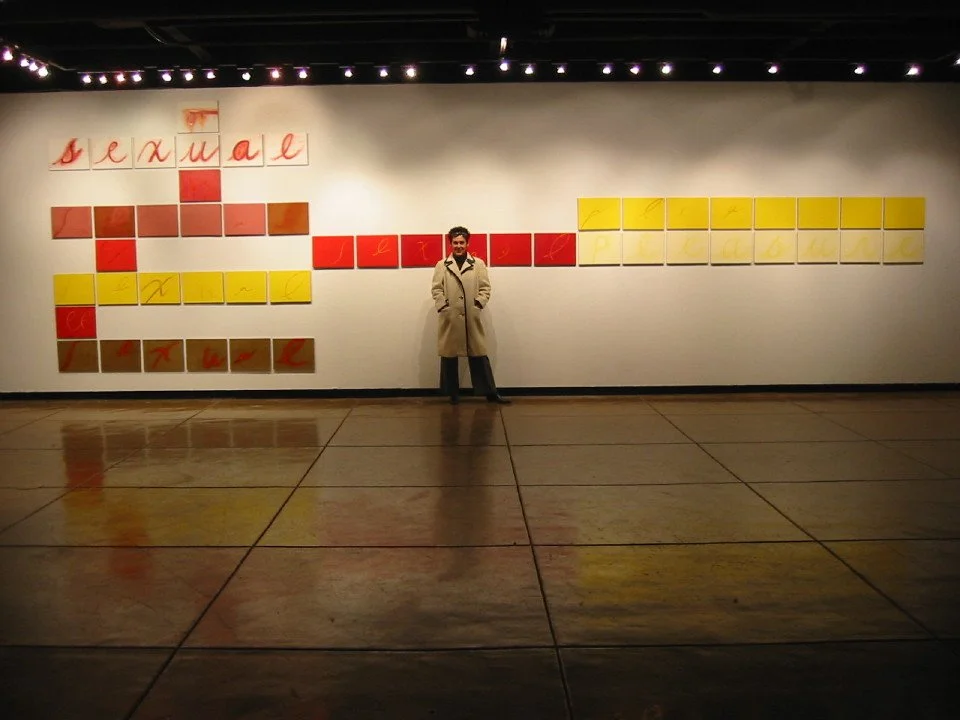
Mira Schor with Sexual Pleasure at the Sheppard Art Gallery at the University of Nevada, Reno, NV, 2003
Born in 1950, Mira Schor is a New York- based artist and writer noted for her advocacy of painting in a post-medium visual culture and for her contributions to feminist art history. She was a member of the CalArts Feminist Art Program and a participant in the historical feminist art installation Womanhouse (1972). Schor’s work balances political and theoretical concerns with formalist and material passions. Her work is focused on gendered narrative and representation of the body but also on representation of language in drawing and painting. The central theme in recent paintings is the experience of living in a moment of radical inequality, austerity, and accelerated time, set against the powerful pull of older notions of time, craft, and visual pleasure.
Mira Schor has a forthcoming retrospective at Lille Métropole Musée d'art moderne, d'art contemporain et d'art brut (LaM), Lille in 2026. In 2025, she had a solo exhibition at Mendes Wood DM in Brussels, BE. In 2023-24 she had a solo exhibition at Bourse de Commerce - the Pinault Collection, Paris, FR and a solo exhibition, her fourth, at a Lyles & King, New York, US. Her work has been included in exhibitions at Centre Pompidou-Metz, Metz, FR; Musée d'art contemporain de la Haute-Vienne, Rochechouart, FR; The Jewish Museum, New York, US; The Hammer Museum, Los Angeles, US; MoMA P.S.1, New York, US; the Neuberger Museum, Purchase, US; The Aldrich Museum, Ridgefield, US; Hauser & Wirth, New York, US; David Nolan, New York, US; PPOW, New York, US; Mendes Wood DM, São Paolo, BR; and many other institutions and galleries. She is the author of A Decade of Negative Thinking: Essays on Art, Politics, and Daily Life (2009); Wet: On Painting, Feminism, and Art Culture (1997; both Duke University Press); and of the blog A Year of Positive Thinking. She is the co-editor of M/E/A/N/I/N/G. Schor is the recipient of many prestigious awards including a Guggenheim Fellowship in Painting, a Pollock-Krasner Grant, the College Art Association’s Frank Jewett Mather Award in Art Criticism, the Anonymous Was A Woman grant, and the Creative Capital / Warhol Foundation Arts Writers Grant. Schor is represented by Lyles & King, New York and Marcelle Alix, Paris. She lives and works in New York, NY.